
Arabic wedding flow in Dubai: planning zaffa, privacy and guest movement
Why the sequence of the night should shape the room plan before décor is finalised.
Published · By Moad Alodeh
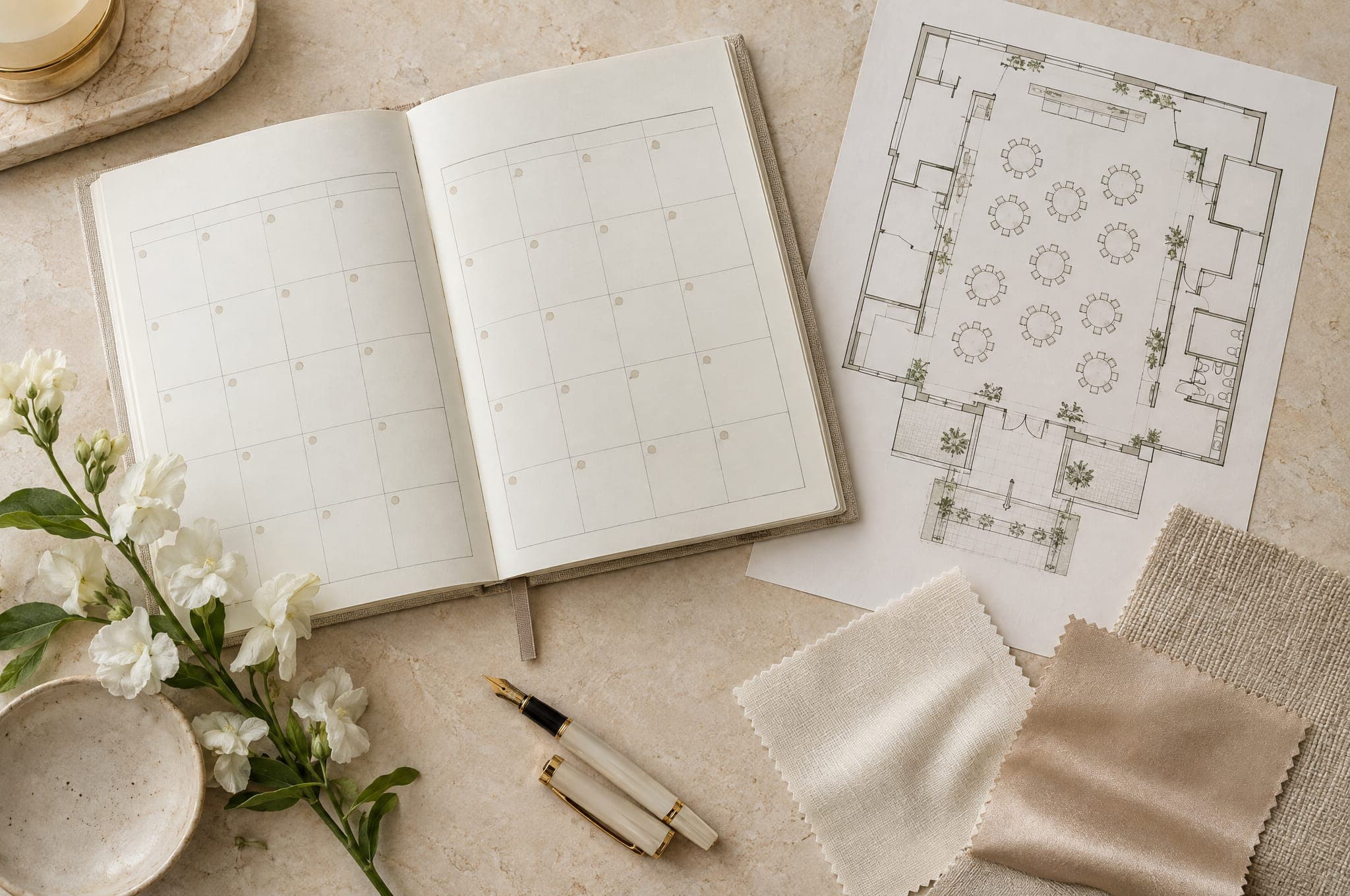
There is no single fixed format for an Arabic wedding in Dubai. Families differ in traditions, privacy requirements, entrances, timing and programme. The useful starting point is not to assume a sequence, but to map the family's actual night and design the room around it.
Build the timeline before finalising the floor plan
List the important moments in order: guest arrival, family reception, entrances, zaffa, seating, dinner, entertainment, photography and any transitions between spaces. Once the sequence is clear, the planner can test whether guests, performers, cameras and service teams can move without interrupting one another.
The zaffa route is part of the architecture
A zaffa is not just a performance added to the schedule. Its starting point, route, width, turning space and destination affect table positions, décor and camera coverage. Walk the proposed route at the venue and check doors, columns, steps, ceiling height and any technical equipment along the path.
Privacy requirements should be designed in from the beginning
For women-only celebrations or events with specific privacy requirements, confirm exactly what the family expects. Consider entrances, doors, service access, supplier movement, photography, venue staff and any line of sight from adjacent public areas. Privacy is an operational plan, not simply a curtain at the ballroom entrance.
Separate receptions need coordinated transitions
Some families may use separate spaces or different phases of the evening. If that applies, map how guests move between reception areas and the main celebration, when doors open, and how announcements or entrances are coordinated. The exact arrangement should follow the family's preference rather than a standard template.
Protect the main entrance from service traffic
The bride's or couple's entrance should not compete with waiters, supplier movement or equipment crossings. Use the venue's service routes wherever possible and coordinate dinner service around major programme moments. This becomes especially important when the entrance aisle also connects to the dance floor or stage.
Plan camera positions before the room is full
Photography and video teams need clear positions for entrances, zaffa and stage moments without blocking family sightlines. Identify camera lanes and key angles on the floor plan, particularly where a long entrance route, catwalk or large guest count creates congestion.
The kosha should work with the programme, not only the photos
The kosha is often the visual focus, but its location also affects entrances, family access, photography and the distance guests travel through the room. Check how the couple reaches it, what happens immediately before and after that moment, and whether the route remains clear throughout the event.
Women-only events require supplier planning too
If the family requires a female-only environment during specific hours, establish which supplier roles must be female and when any male technical crew must finish work or leave controlled areas. Coordinate this with the venue and suppliers well before event day so the production plan can actually meet the requirement.
Questions to answer before approving the plan
- What sequence does this family want for the night?
- Where does each entrance or zaffa begin and end?
- Are there women-only or other specific privacy requirements?
- Will any reception areas or phases be separated?
- How will guests move between entrances, tables, dance floor and kosha?
- Where will photographers and video teams work?
- When can food and service teams cross the room?
- Which supplier roles need access during privacy-controlled periods?
- What venue doors, corridors or service routes are available?
- Who has authority to cue each major programme transition?